I don’t remember what they’re called, even though I’ve heard the name several times. It’s a kind of layered puff pastry rectangle full of feta cheese. You can buy them everywhere, and I found a great tiny little storefront/bakery in Plovdiv where I managed to get them fresh twice. Unreasonably good. crispy and soft and hot and just a little gooey. And cheap. So cheap. My new Bulgarian home, Valiko Tarnovo, is nice, but the lack of these pastry things is a huge mark against it. It’s Sunday, so maybe there’ll be some to be had tomorrow. God I hope so.
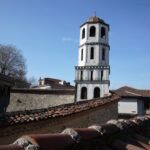
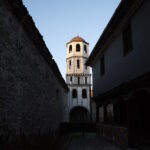
Otherwise it’s good here. Nice old buildings, ludicrously large ruined fortress/palace, the seat of the Bulgarian empire in it’s height. Already it feels farther from Turkey though, and while the houses are of a similar style, they lack a bit of the Ottoman flare which I so appreciate. On the plus side, this town has a bloody massive iron monoment on the tip of a peninsula (the river weaving through town is another bonus) which I appreciate in its thoroughly overbearing glory. What else? Bulgarian trains are fast, cheap, and super comfortable. I think there are newer versions, but the one I took here looked like it was built in the 50’s, but was electric and had new upholstery in its suave compartments (compartments! With doors and such. I love trains). I’m not certain what it is, but I find Bulgaria hugely charming. We passed some sort of army depot on the way, and while there were a couple of newish MiG looking beasts, there were dozens and dozens of very old-school, round-headlighted trucks and vans and such, in the full spectrum of (dis)repair. And then there’s the buildings. Bulgaria has negative population growth, the lowest in the Euro area, which must be part of it, and I imagine the whole planned economy thing contributes as well, but there are abandoned buildings everywhere. Some half-ruined, some mostly intact save the glass. Newish houses, apartment blocks, factories, old brick homes. Everything you can imagine. Mixed into the nicest areas (these I assume exist because of legal or ownership confusion), on the outskirts, in the middle of nowhere. It’s great. The buildings that are inhabited are mostly, from what I’ve seen so far, well kept, and these ruins don’t have the same depressing effect that half-ruined but clearly occupied buildings have, at least for me. They don’t necessarily indicate poverty, just… errors. Or lack of need. Or something, I’m not sure, and I’m not sure why I like them so much. But they are pleasing.
-
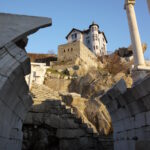
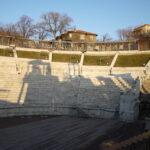
- There’s so many different centuries of structures happening here.
-
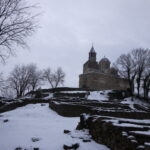
- Tippity-top
-
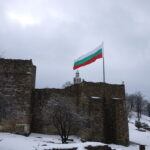
- Old glory
-
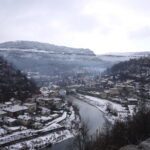
- Veliko Tarnovo, the back.